Compounded Semaglutide for Menopause: When Nothing Else Works
Your metabolism genuinely slowed. You're burning 200-300 fewer calories daily. The diet that worked at 35 fails at 55. Compounded semaglutide doesn't require estrogen to work—it gives menopausal women a weight loss tool that actually matches their new metabolic reality.

How Semaglutide Is Considered After Menopause
Menopausal status is one part of a broader medical and weight-management evaluation.
Individual Candidacy
Menopausal status is considered alongside medical history, medications, contraindications, risks, and goals when evaluating treatment options.
Regional Body Composition
Body-fat distribution can change during menopause. DEXA can estimate regional fat and lean mass, but treatment cannot target one body area or guarantee a specific result.
Appetite and Tolerance
Appetite response, adverse effects, medication tolerance, nutrition, and adherence are reviewed over time without promising a particular result.
The Menopausal Metabolism Challenge
Menopause can coincide with changes in body composition, sleep, activity, and cardiometabolic risk. The pattern and causes vary, so the evaluation considers symptoms, medical history, medications, nutrition, activity, sleep, and objective measurements.
Weight change during and after menopause can reflect multiple interacting factors rather than one hormone or one behavior. The evaluation avoids assuming a single cause.
Whether compounded semaglutide is appropriate after menopause depends on the full clinical picture. It is not FDA-approved, and outcomes from approved-product trials should not be used to predict an individual result.
Medication discussion: Highland discusses FDA-approved options first when appropriate. A compounded formulation may be considered only for a documented patient-specific clinical need when applicable requirements are met; compounded semaglutide is not FDA-approved.
- Menopausal status included in the clinical evaluation
- Metabolic markers monitored when clinically indicated
- Appetite response and adverse effects reassessed
- Regional fat and lean-mass estimates monitored when useful
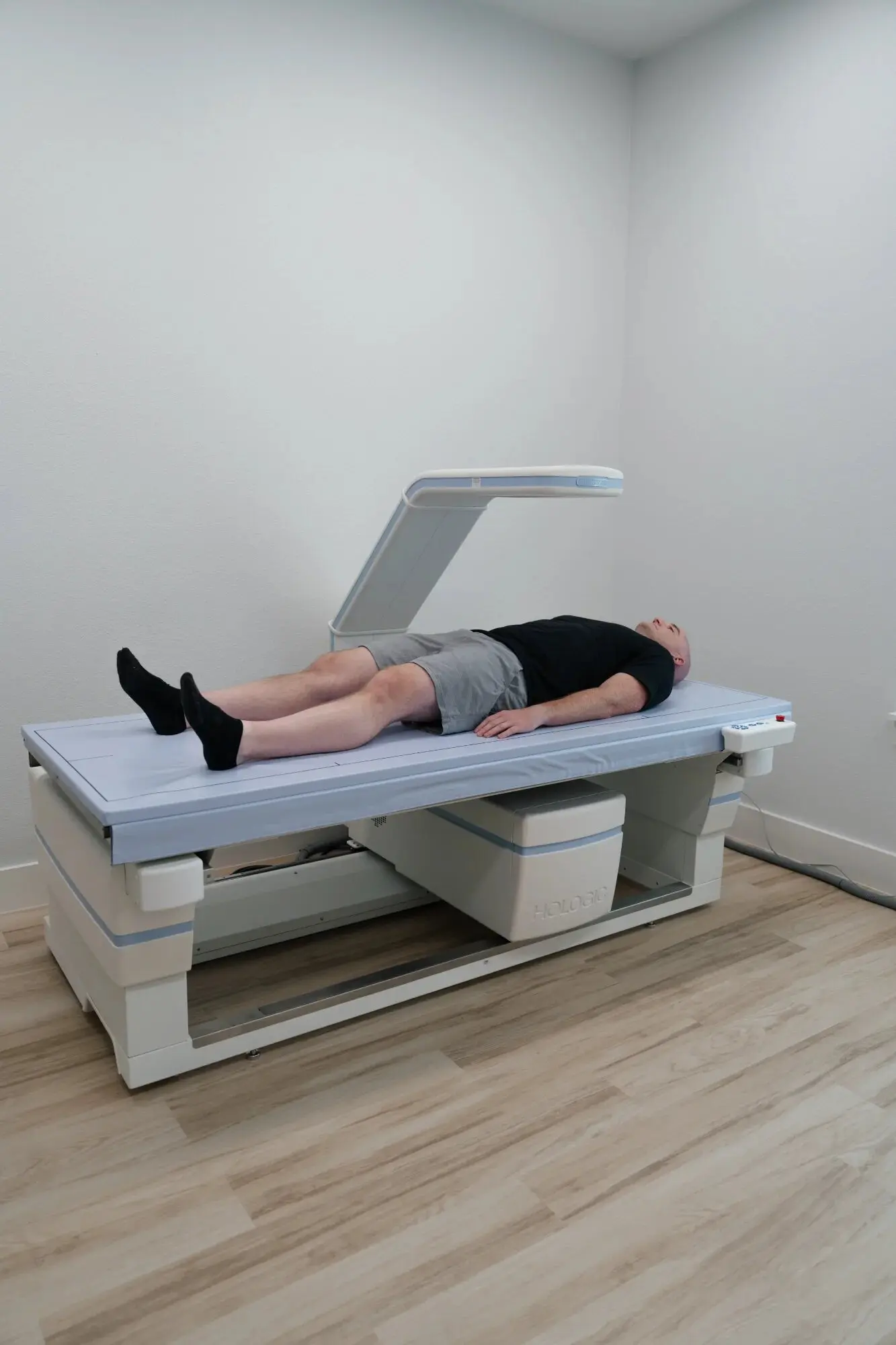
Monitoring Lean Mass During Weight Loss
Weight loss can include fat mass and lean mass. DEXA estimates changes in each so nutrition, resistance training, medication, and follow-up can be reassessed; it does not measure muscle directly or guarantee preservation.
- DEXA estimates fat mass and lean mass
- Protein guidance is individualized
- Resistance training is adjusted to ability and goals
- Symptoms, function, and adverse effects are reviewed
Our goal isn't just a lower number on the scale—it's improved body composition that serves your health for decades to come.

Individualized Menopause Weight Care
"Menopausal women often feel betrayed by their bodies—and by a medical system that tells them to just try harder. But the metabolic slowdown is real, and willpower can't overcome biology. Compounded semaglutide gives us a way to match modern medicine to the reality of midlife metabolism."
— Dr. Josh Lindsley, DO, DABOM
Compounded Semaglutide for Menopause FAQs
No. Highland discusses FDA-approved options first and limits compounding to documented patient-specific needs. We do not dispense Wegovy, Ozempic, or Rybelsus, which are brand-name semaglutide products manufactured by Novo Nordisk. Compounded semaglutide is prepared by a state-licensed compounding pharmacy under physician supervision. Compounded medications are not FDA-approved.
Menopausal status is one part of the clinical evaluation. Whether semaglutide is appropriate depends on medical history, contraindications, current medications, reproductive considerations, risks, and goals. Highland prescribes compounded semaglutide; it is not FDA-approved, and approved-product studies do not establish expected outcomes for the compounded formulation.
Using semaglutide and hormone therapy together requires individualized review. The clinician considers route, current medications, contraindications, risks, and monitoring needs; patients should not assume the combination is appropriate without medical evaluation.
Weight loss cannot be directed to one body area. DEXA can estimate regional fat and lean mass over time, but neither the medication nor the scan guarantees a specific body-composition result.
Weight response after menopause varies by patient and treatment. Follow-up may include symptoms, adverse effects, weight and waist trends, and DEXA estimates when useful; no amount, pace, or body-composition result is guaranteed.
Hormone therapy is not a prerequisite for a weight-loss evaluation. Each treatment has separate indications, contraindications, risks, and goals and should be considered through shared decision-making.
Weight loss can include fat mass and lean mass. DEXA may estimate changes in each so nutrition, resistance training, medication, and follow-up can be reassessed; it does not measure muscle directly or guarantee preservation.
Serving Fort Worth & Surrounding Communities
Our clinic is conveniently located in the Fort Worth Alliance area, just minutes from communities throughout the DFW metroplex.
Located at 4801 Golden Triangle Blvd Suite 121, Fort Worth, TX 76244
Ready for Weight Loss That Matches Your Reality?
Book a free consultation to discuss how compounded semaglutide can help you lose weight—even when menopause has changed all the rules.
Compounded medication disclaimer: Highland discusses FDA-approved options first and limits compounding to documented patient-specific needs. We do not dispense Wegovy®, Ozempic®, Rybelsus®, or any other brand-name semaglutide product manufactured by Novo Nordisk.
Compounded semaglutide is prepared by a state-licensed compounding pharmacy under the supervision of our physician. Compounded medications are not FDA-approved. They are permitted under federal law when an FDA-approved product cannot meet the patient's clinical needs, or when the FDA designates a shortage. Your physician will discuss the implications, risks, and benefits of compounded therapy at your consultation.