DEXA body scan · Fort Worth, Texas
DEXA body composition scans in Fort Worth, explained in plain English.
The scale tells you how much you weigh. A DEXA scan shows what that weight is made of, fat, lean tissue and bone, and our team sits down with you to explain what your numbers mean for your plan.
- In-house DEXA scanner
- No referral needed
- Physician-led care team
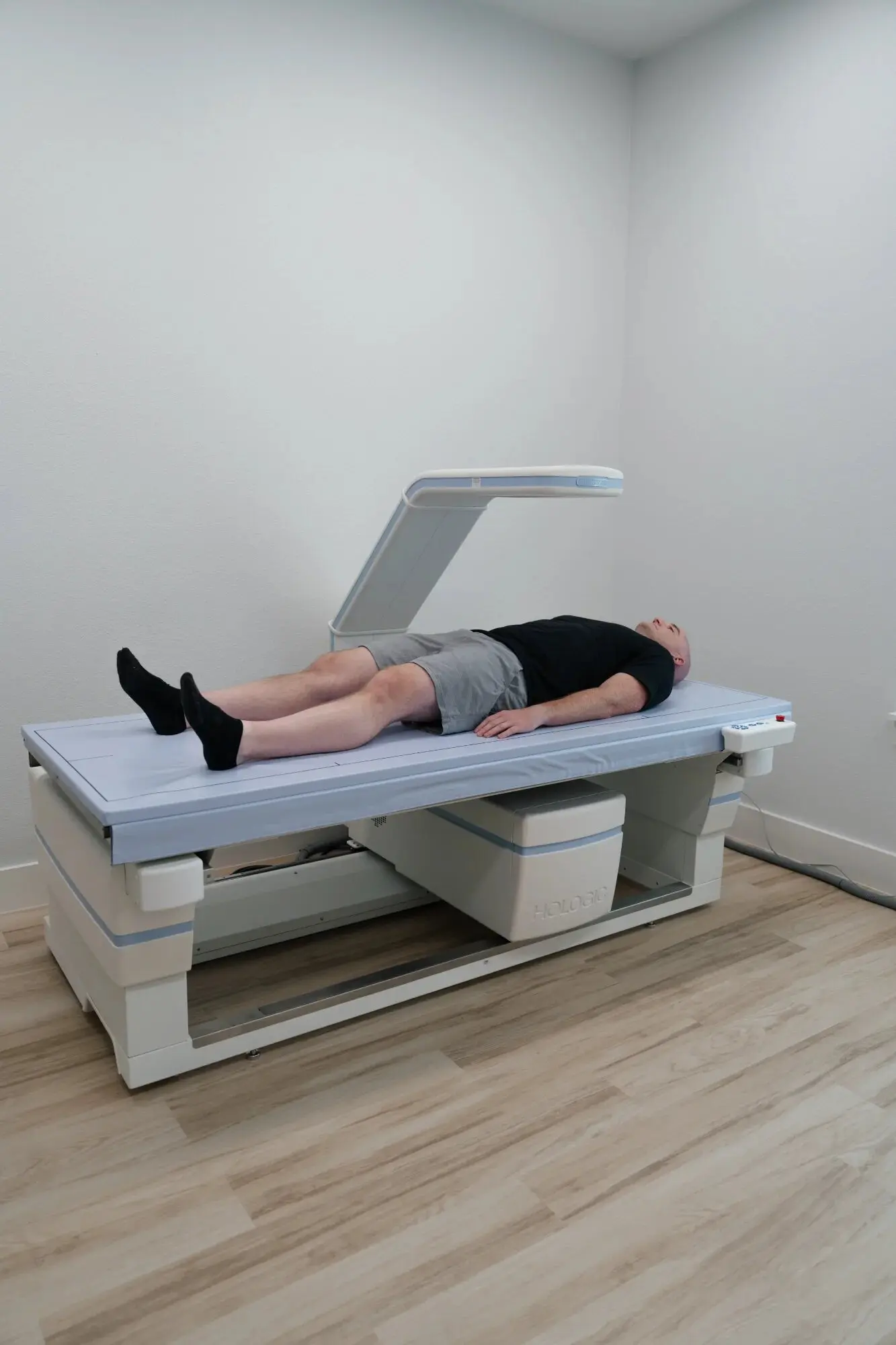
What a DEXA scan is
The scale can’t tell fat from muscle. DEXA can.
DEXA stands for Dual-Energy X-ray Absorptiometry. DEXA uses two low-energy X-ray beams at different frequencies. DEXA separates your body into three compartments: fat, lean tissue and bone.
Weight loss can include both fat mass and lean mass. DEXA estimates fat mass, lean mass, regional fat distribution (including visceral fat), and bone mineral measures so trends can be reviewed over time.
DEXA measures lean mass rather than muscle directly and cannot ensure that all weight lost is fat.
- ScanYou lie on the table for about 7–10 minutes while a low-energy X-ray arm passes over you.
- SeparateDEXA separates your body into three compartments: fat, lean tissue and bone.
- CompareRepeat scans track whether you’re preserving muscle during weight loss.
Your report
What your scan measures
Every DEXA scan provides a comprehensive breakdown of your body composition.
-
Total body fat percentage
Your overall fat mass as a percentage of total body weight.
-
Lean mass
Total lean tissue including muscle, organs, and water. Critical for tracking whether you're preserving muscle during medical weight loss.
-
Visceral adipose tissue (VAT)
The fat surrounding your organs.
-
Bone mineral density
Assess bone health and osteoporosis risk. Important baseline for hormone therapy and aging protocols.
-
Regional composition
Fat and lean mass broken down by arms, legs, trunk, and android/gynoid regions for detailed analysis.
-
Appendicular lean mass index
Muscle mass in your arms and legs relative to height—a key marker for sarcopenia and functional strength.
The Highland difference
Not just a scanner. A medical tool inside your care plan.
A scan on its own is a printout. At Highland, your DEXA results sit next to your labs, your nutrition plan and your treatment — and the people who read them know you.
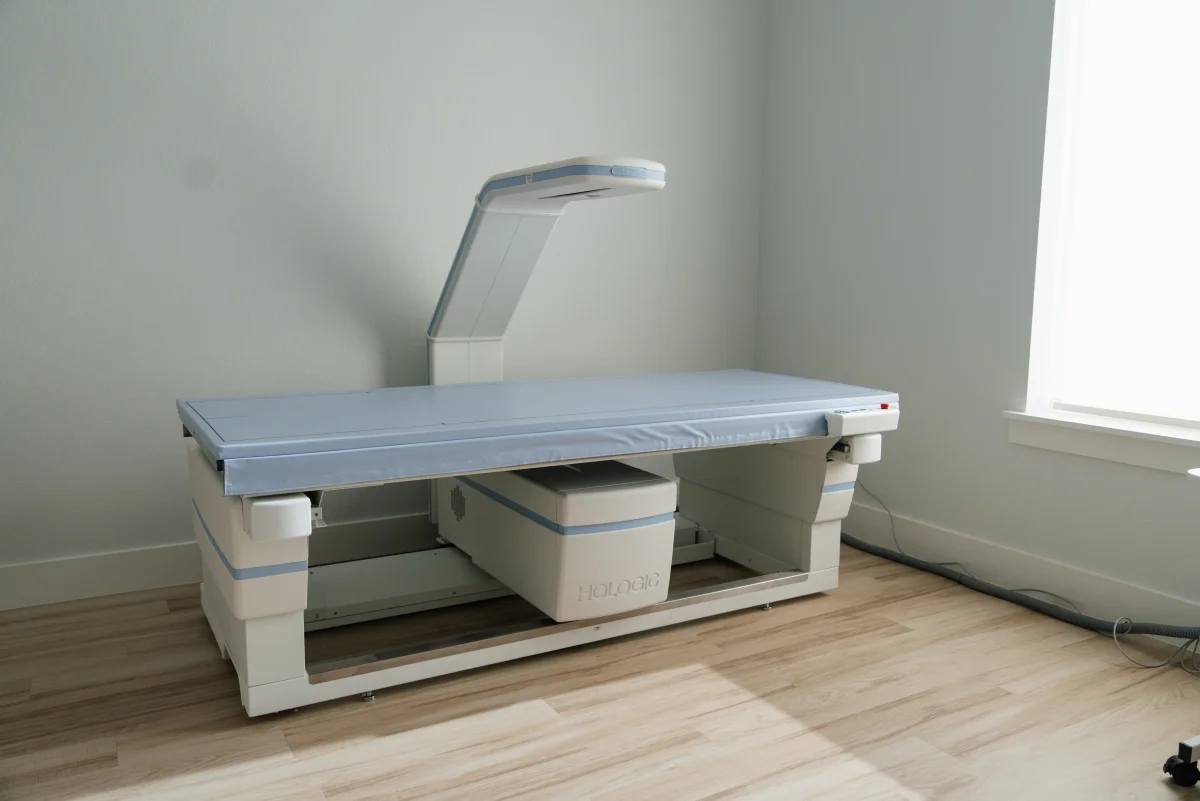
01
The scanner is down the hall, not across town
At Highland Longevity, we have our own DEXA scanner in-house—no referrals, no waiting for outside appointments. Hologic medical-grade DEXA—not gym equipment.
We run DEXA body-composition scans in our own clinic, so your baseline and every re-scan happen where your care happens — and your results are reviewed with you, not mailed to you as a printout.

02
Someone explains what your numbers mean
We explain what your numbers mean for your metabolism, bone health, and treatment response—not just raw data.
Highland Longevity’s medical director, Dr. Joshua Lindsley, DO, DABOM, is board-certified in Obesity Medicine by the American Board of Obesity Medicine and in Emergency Medicine.
-
03
Body recomposition focus
We care about fat lost and muscle preserved. DEXA shows the difference between scale weight loss and actual body composition improvement.
-
04
Tracked over time
Your scan results are stored in your health record. Compare year-over-year changes, track trends, and adjust protocols based on real data.
-
05
Connected to the rest of your care
Your scan can sit alongside resting metabolic rate testing, VO₂ max testing, labs and nutrition support, so your results feed straight into your plan.
Side by side
How Highland compares
Data without a plan is just trivia. Treatment without data is guesswork. Highland keeps both in the same place.
| What you get | Highland Longevity | Scan-only shop | Treatment-only clinic |
|---|---|---|---|
| DEXA body composition & bone density | Yes | Yes | No |
| Resting metabolic rate (RMR) | Yes | Sometimes | No |
| Comprehensive lab panels | Yes | No | Yes |
| Clinician interprets your results | Yes | No | Yes |
| Personalized treatment plan | Yes | No | Yes |
| Re-tests to track your progress | Yes | No | Rarely |
General comparison of clinic models. Offerings at other clinics vary by location. See the full test, interpret, treat, and re-test model.
What to expect
Your DEXA appointment
Quick, painless, and non-invasive — here’s how your visit works.
-
01
Check in
Wear comfortable clothing without metal. Remove jewelry and belts.
-
02
Scan
Lie still on the scanning bed for 7-10 minutes while the arm passes over you.
-
03
Results
Your detailed report generates immediately—no waiting days for results.
-
04
Review
We walk through your numbers together and discuss what they mean for your goals.
Who it’s for
Where a DEXA scan fits in your care
A DEXA scan can be part of several Highland programs — or a clear starting point on its own. Not sure it’s right for you? Ask at your visit.
- Medical weight lossBody composition tracked alongside your plan
- Compounded semaglutideFollow-up scans during treatment
- Compounded tirzepatideFollow-up scans during treatment
- Hormone therapyA bone mineral density baseline
- Muscle lossProtecting lean mass as you lose weight
- RMR testingEstimate resting energy expenditure to inform nutrition planning.
- DEXA vs. InBodyCompare how DEXA and gym-based body-composition methods estimate fat mass and lean mass.
- Testing + treatmentWhy Highland pairs DEXA with physician-led treatment and tracking
Questions
Frequently asked questions
Something we didn’t cover? Call (214) 444-9796 — a real person at our Fort Worth clinic will answer.
DEXA is the gold standard for body composition with ±1-2% accuracy for body fat percentage. This is far more accurate than bioelectrical impedance scales (±5-8%), calipers, or BMI calculations. The precision allows us to detect meaningful changes of just 1-2 pounds of fat or muscle.
T-score compares your bone density to a healthy 30-year-old adult. A T-score above −1.0 is normal, −1.0 to −2.5 indicates osteopenia, and below −2.5 indicates osteoporosis. Z-score compares you to others your age and gender. Both are used for fracture risk assessment. Your physician interprets these results in the context of your overall health.
The scan itself takes about 7-10 minutes. With check-in, changing if needed, and results review, plan for a 20-30 minute appointment total.
DEXA uses very low radiation—about 0.001 mSv per scan. For comparison, a chest X-ray is about 100x more radiation, a mammogram is 400x more, and a cross-country flight exposes you to about 40x more. It's completely safe for regular monitoring every 8-12 weeks.
For weight loss patients, we recommend scanning every 8-12 weeks. This gives enough time to see meaningful changes (2-4% body fat) while allowing for protocol adjustments if progress stalls. More frequent scanning doesn't provide actionable data.
Preparation is simple: avoid eating or drinking 2-3 hours before, wear light comfortable clothing without metal (athletic wear is ideal), skip strenuous exercise the morning of, and try to scan at the same time of day for follow-ups. Hydration and recent meals can slightly affect readings, so consistency helps track true body composition changes.
Your DEXA scan shows: total body fat percentage, lean muscle mass, visceral adipose tissue (dangerous belly fat), bone mineral density with T-score and Z-score, regional breakdown by body area (arms, legs, trunk), and appendicular lean mass index. You receive a detailed report and physician interpretation of what each metric means for your metabolic health and goals.
InBody uses bioelectrical impedance—it sends electrical current through your body and estimates composition based on resistance. It's convenient but much less accurate (±5-8%) and affected by hydration, recent meals, and exercise. DEXA directly measures tissue density using X-ray, making it the clinical gold standard.
Our team confirms the cost of your DEXA scan when you book. Each scan includes the full-body medical-grade scan and physician review of results. Most patients get scans every 8-12 weeks to track progress on weight loss or hormone protocols. Costs for ongoing scans are reviewed with you at your consultation.
Highland Longevity · Fort Worth, Texas
Plan your DEXA visit in Fort Worth
Schedule body composition testing at our Fort Worth clinic. Call our team with questions about preparing for your scan or arranging a visit to discuss your results.
View testing appointmentsVisit our Fort Worth clinic
4801 Golden Triangle Blvd, Suite 121Fort Worth, TX 76244
Monday–Friday, 8 a.m.–5 p.m.
First and second Saturdays, 10 a.m.–2 p.m.; other Saturdays closed.
Start with a scan
Know your numbers.
Stop guessing about your progress. Get precise, actionable data on your body composition with an in-house DEXA scan at Highland Longevity.
Medical Disclaimer: This page provides educational information about DEXA body composition scanning. DEXA scans are diagnostic medical tests that should be interpreted by a qualified healthcare provider. Results are individual and based on your body composition, bone density, and health status. This information is not a substitute for professional medical advice, diagnosis, or treatment. Always consult with a physician before starting any new health assessment, diet, or exercise program, especially if you have existing health conditions.
Medical references & guidelines.
- Shepherd, J. A., et al. (2017). Body Composition by DXA. Bone.
- International Society for Clinical Densitometry (ISCD). (2019). Official Positions - Body Composition Analysis.
- Bazzocchi, A., et al. (2016). DXA: Technical aspects and application. European Journal of Radiology.