Menopause Weight Gain: Your Body Changed—Your Approach Should Too
The diet that worked in your 30s doesn't work anymore. That's not a failure—it's biology. Declining estrogen has fundamentally changed how your body stores fat and burns calories. At Highland Longevity, we match modern medicine to your new metabolic reality.

What Menopause Does to Your Metabolism
Understanding these changes explains why willpower alone isn't enough anymore.
Estrogen Decline
Falling estrogen levels shift fat storage from hips/thighs to your abdomen—the most dangerous location for health.
Muscle Loss
Women lose 3-8% of muscle mass per decade after 30. Less muscle means you burn fewer calories all day, every day.
Metabolic Slowdown
Your resting metabolic rate drops 200-300 calories daily. Eating the same as before now creates a calorie surplus.
Insulin Changes
Declining estrogen increases insulin resistance, making it easier to gain weight and harder to lose it.
The Menopause Weight Equation
Between ages 45 and 55, the average woman gains 10-15 pounds—regardless of diet or exercise habits. This isn't coincidence or lack of discipline. It's the predictable result of hormonal changes that affect every woman.
The frustrating part? Traditional weight loss advice—"eat less, move more"—ignores this biology. When your metabolism has genuinely slowed and your hormones are driving fat storage, you need medical tools, not just motivation.
That's where GLP-1 medications like semaglutide change the game. They work regardless of your hormonal status, reducing appetite and improving insulin sensitivity. Combined with strategies to preserve muscle mass, women in menopause can lose significant weight—often for the first time in years.
- Average menopausal woman burns 200-300 fewer calories daily
- Visceral (belly) fat increases even without weight gain
- Muscle loss accelerates without intervention
- GLP-1 medications work independently of estrogen levels
Our Menopause Weight Loss Approach
Medical treatment designed for the unique challenges of midlife metabolism.
Baseline Assessment
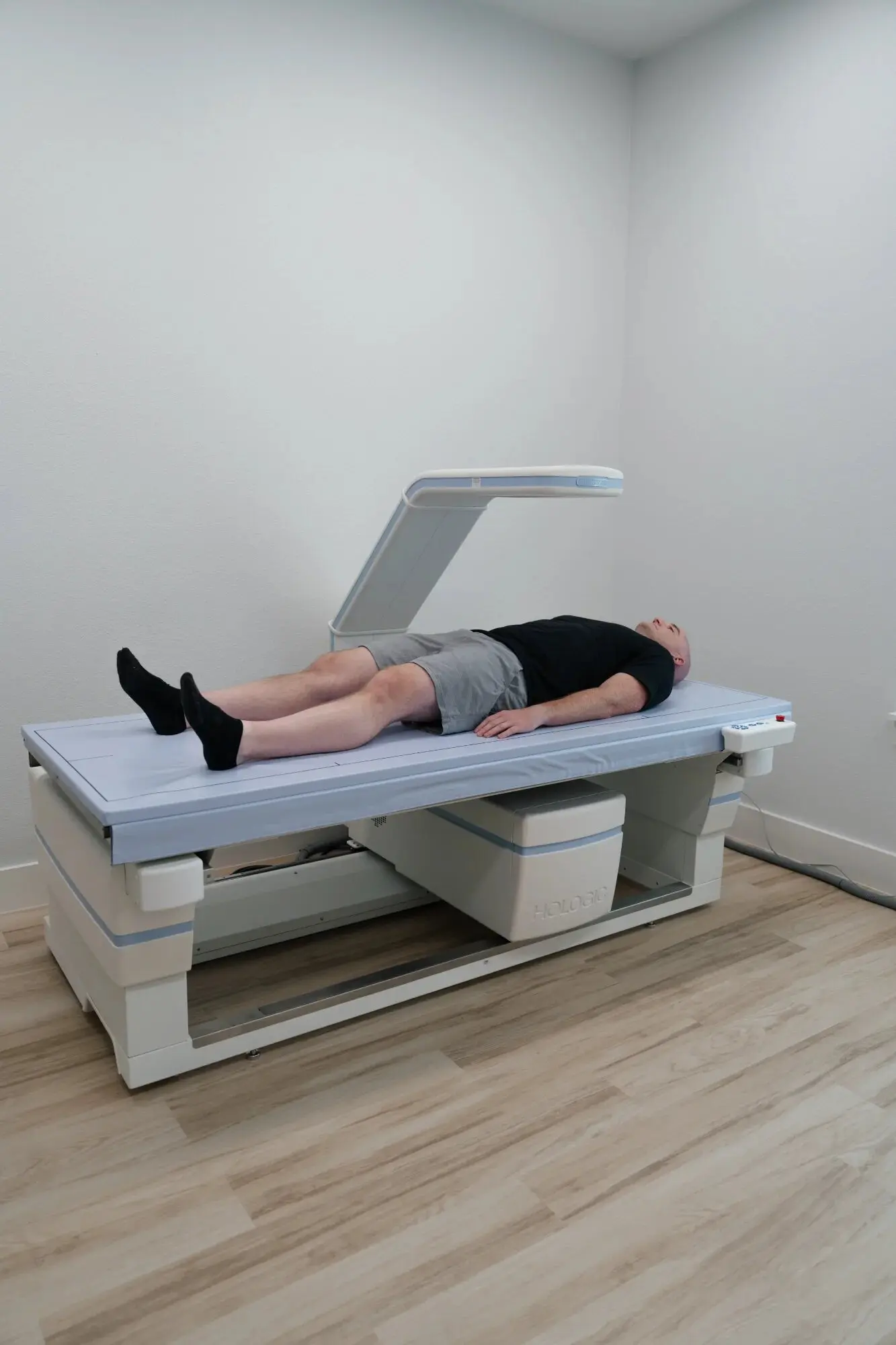
DEXA may estimate fat mass and lean mass, while resting metabolic rate testing estimates resting energy expenditure. Results are interpreted alongside symptoms, medications, sleep, activity, nutrition, and other clinical findings.
GLP-1 Medication
Semaglutide or tirzepatide reduces appetite and improves insulin sensitivity—addressing the hormonal drivers of menopausal weight gain without requiring hormone therapy.
Muscle Preservation
We use DEXA tracking to estimate changes in fat mass and lean mass during treatment. Protein guidance and optional peptide therapy support lean mass retention.

Understanding Midlife Metabolism
"Women going through menopause aren't failing at weight loss—their bodies have fundamentally changed. When I see a patient who's done everything 'right' and still can't lose weight, that's a metabolic problem, not a motivation problem. GLP-1 medications give us tools that actually work for the hormonal reality of midlife."
— Dr. Josh Lindsley, DO, DABOM
Treatment Options for Menopausal Weight Gain
Medical approaches designed for the hormonal complexity of midlife.
GLP-1 Medications
Semaglutide or TirzepatideMedication options considered only after individualized review of menopausal symptoms, medical history, contraindications, current medicines, risks, and goals.
- Hormonal status included in the clinical evaluation
- Regional fat and lean-mass estimates monitored when useful
- Metabolic markers monitored when clinically indicated
- Outcomes vary; no amount or timeline is guaranteed
Hormone Optimization
HRT CoordinationHormone replacement therapy can improve body composition, energy, and quality of life. We coordinate with your OB/GYN or can provide comprehensive hormone management.
- Helps preserve muscle mass
- Improves energy and sleep
- Complements weight loss treatment
- Individualized approach
DEXA Body Composition
Precision TrackingMedical-grade scans that show exactly what you're losing—crucial for menopausal women who need to preserve muscle while losing fat.
- Differentiates fat loss from muscle loss
- Tracks visceral (belly) fat specifically
- Monitors bone density too
- 10-minute scan
Metabolic Testing (RMR)
Know Your True NumbersMeasure your exact resting metabolic rate to see how menopause has affected your calorie burn—then create a sustainable eating plan based on real data.
- Exact daily calorie needs
- Estimates resting energy expenditure
- Prevents undereating (which slows metabolism further)
- 20-minute breath test
Menopause Weight Loss FAQs
Declining estrogen levels fundamentally change your metabolism. Fat storage shifts from hips and thighs to the abdomen. You lose muscle mass, which lowers your metabolic rate. And insulin resistance increases. The result: you burn fewer calories while your body preferentially stores fat around your midsection.
HRT can help prevent muscle loss and improve body composition, but it's typically not enough on its own for significant weight loss. Many women find the best results combining hormone optimization with GLP-1 medications—addressing both the hormonal symptoms and the metabolic changes.
Weight management can become more complex after menopause, but the pattern and causes vary. Treatment decisions depend on symptoms, body composition, sleep, activity, medications, metabolic health, contraindications, risks, and goals. No outcome is guaranteed.
Body-fat distribution can change around menopause, but the pattern and causes vary. DEXA may estimate regional fat distribution; no medication can target one body area or guarantee a specific change.
No. GLP-1 medications work independently of hormone status. Many patients come to us without HRT and achieve significant weight loss. If you're interested in hormone optimization, we can discuss whether it might complement your weight loss treatment.
We use DEXA scans to monitor both fat and muscle during treatment. We emphasize adequate protein intake (typically 100+ grams daily for menopausal women) and may recommend strength training. Some patients benefit from peptide therapy to support lean mass. Our goal is fat loss, not just weight loss.
Serving Fort Worth & Surrounding Communities
Our clinic is conveniently located in the Fort Worth Alliance area, just minutes from communities throughout the DFW metroplex.
Located at 4801 Golden Triangle Blvd Suite 121, Fort Worth, TX 76244
Ready to Work With Your Biology Instead of Against It?
Book a free consultation to learn how we can help you lose weight—even when menopause has changed all the rules.