Performance diagnostics · Fort Worth, Texas
VO₂ max testing in Fort Worth. Measured, not guessed.
Your fitness tracker guesses. We measure. VO₂ max measures how efficiently your body uses oxygen during intense exercise, and our physician-led team sits down with you to explain what your numbers mean for your training and your health.
- Physician-interpreted results
- In-house DEXA & RMR testing
- Physician-led care team
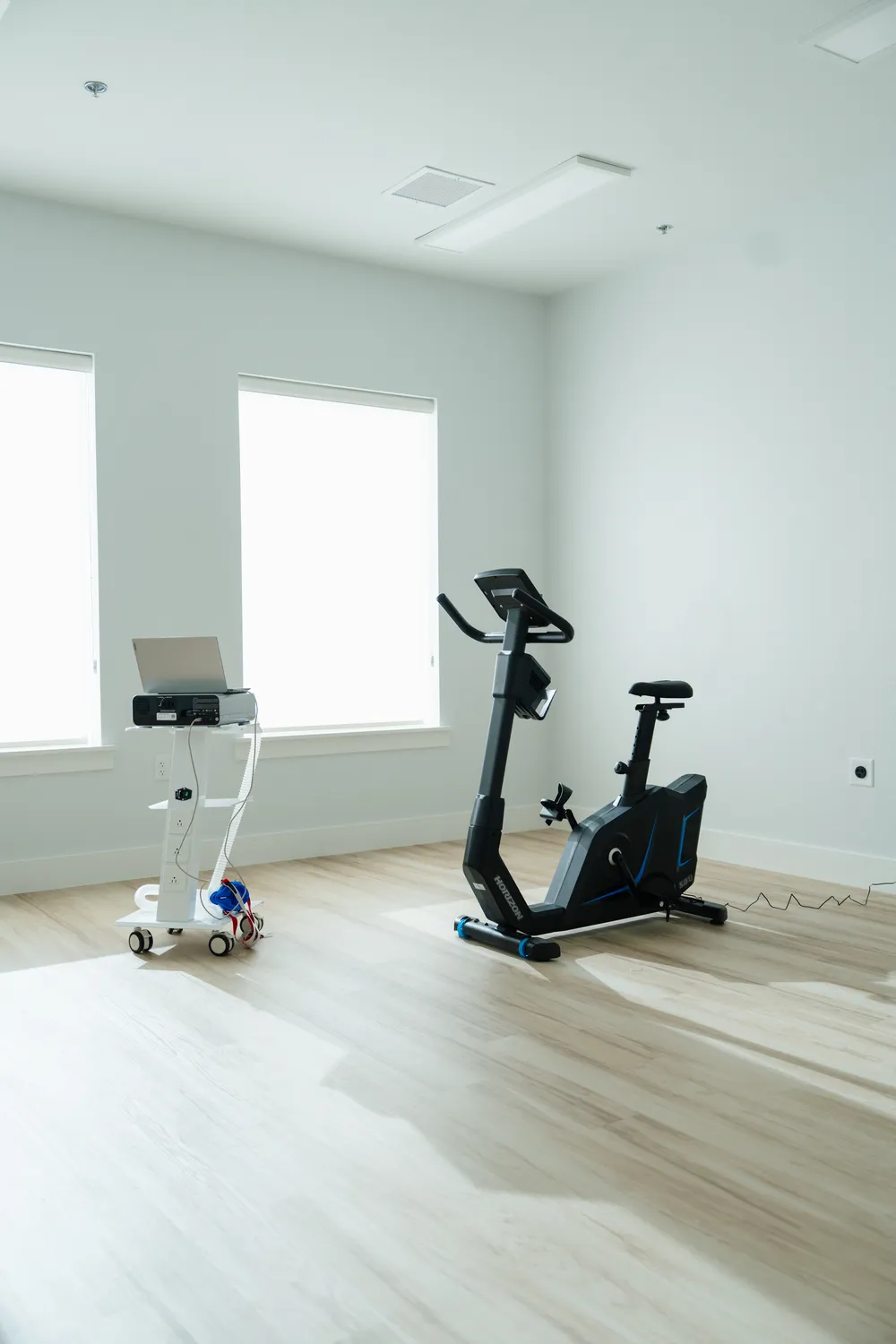
What it is
Why VO₂ max is worth knowing for real.
VO₂ max measures how efficiently your body uses oxygen during intense exercise. It's expressed in milliliters of oxygen per kilogram of body weight per minute (ml/kg/min). The higher your VO₂ max, the more work your cardiovascular system can do.
But here's what makes it matter for longevity: research consistently shows that VO₂ max is the strongest predictor of all-cause mortality—stronger than smoking, hypertension, or diabetes as individual risk factors. In a study of more than 122,000 adults who had treadmill testing, the added risk of death from low fitness was comparable to or greater than smoking, diabetes and coronary artery disease (Mandsager et al., JAMA Network Open, 2018).
Unlike your genetics, VO₂ max is modifiable. But first, you need to know where you're starting.
Your fitness watch provides estimates. We provide measurements.
Your report
What your VO₂ max test reveals
More than just a single number—your test provides actionable data to optimize training and health.
-
Your true VO₂ max
The actual maximum oxygen your body can utilize—not an algorithm's guess. Know exactly where you stand compared to age and gender norms, and what "elite" looks like for your demographic.
-
Heart rate zones
Your actual aerobic threshold, anaerobic threshold, and max heart rate—not generic formulas. Train in the right zones to maximize results and avoid overtraining or undertraining.
-
Metabolic efficiency
How efficiently you burn fat vs. carbohydrates at different intensities. Critical for endurance athletes and anyone optimizing body composition.
-
Lactate threshold
Your lactate threshold is the intensity at which lactate accumulates faster than it's cleared—your sustainable "race pace." We also measure respiratory exchange ratio (RER) to determine fuel utilization.
-
Training recommendations
Physician-interpreted results with specific guidance on how to improve. Not just data—actionable steps to move up the fitness curve.
-
Longevity benchmarks
Where you stand relative to mortality risk categories, and what VO₂ max target would meaningfully reduce your all-cause mortality risk.
The Highland difference
Not just a test. A starting point for your plan.
VO₂ max testing is available at many gyms and labs. At Highland, your result sits next to your body composition, your metabolism and your labs, and the team that reads it knows you.
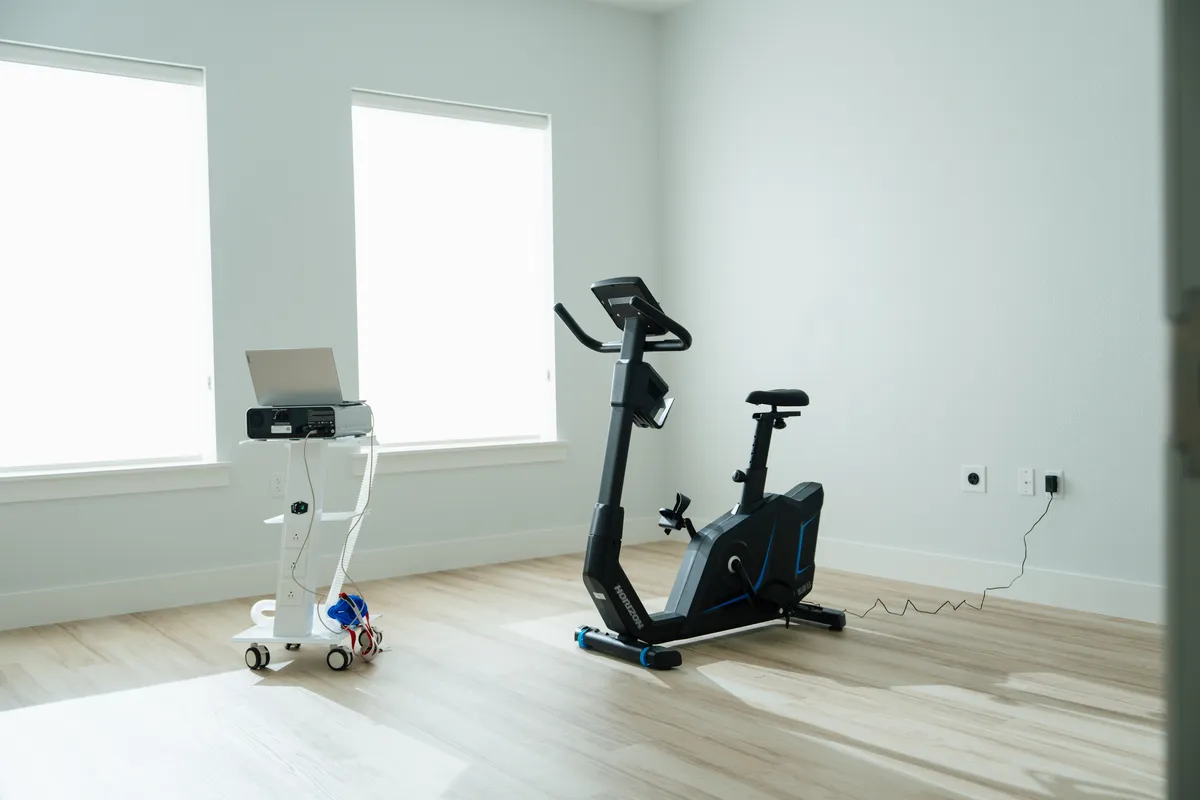
01
Testing first, all under one roof
Your VO₂ max test, DEXA body composition scan, resting metabolic rate test and lab work all happen in our Fort Worth clinic, so your results come together in one place.
VO₂ max tells you about cardiovascular fitness, but it doesn't tell the full fitness story. We pair your testing with optional DEXA body composition scanning to measure lean mass, fat mass, and bone density.

02
Physician-interpreted results, not just data
Unlike lab-only testing that hands you a spreadsheet, our providers interpret your results through a clinical lens. We don't just tell you your VO₂ max—we explain what it means for your cardiovascular health, where you stand relative to mortality risk categories, and exactly what you need to do to improve.
Highland Longevity’s medical director, Dr. Joshua Lindsley, DO, DABOM, is board-certified in Obesity Medicine by the American Board of Obesity Medicine and in Emergency Medicine. Most medical visits are with our nurse practitioner, within our physician-led clinical team.
-
03
Longevity-focused interpretation
We interpret your results through a longevity lens, not just athletic performance. Whether you're training for a race or training for a longer, healthier life, our approach aligns with your actual goals.
-
04
Re-tested on a schedule
A single number is a snapshot. We plan follow-up tests with you, so you can see whether your training is moving your results.
-
05
Help putting it to work
Our team includes a physical therapist and personal trainers, in person or virtually, who can help turn your heart rate zones into a training plan you can follow.
Side by side
Lab testing vs. watch estimates
Fitness watches estimate VO₂ max using algorithms based on heart rate, pace, and other variables. A lab test measures it directly.
| What you get | Lab VO₂ test | Watch estimate |
|---|---|---|
| Direct oxygen measurement | Yes | No |
| True anaerobic threshold | Yes | No |
| Actual max heart rate | Yes | Formula |
| Fat/carb burn ratios | Yes | No |
| Training zone accuracy | Yes | Estimated |
| Physician interpretation | Yes | No |
General comparison. See the full test, interpret, treat, and re-test model.
What to expect
What to expect during your test
A VO₂ max test is challenging but brief. Here's the process from start to finish.
-
01
Pre-test setup (5-10 min)
We'll review your health history, check your resting heart rate and blood pressure, and fit you with the metabolic analysis mask. The mask measures every breath—oxygen in, carbon dioxide out.
-
02
Warm-up (3-5 min)
You'll start at an easy pace on the treadmill or cycling ergometer to establish baseline measurements and let your cardiovascular system prepare for the increasing intensity.
-
03
Ramping protocol (10-15 min)
Every 1-2 minutes, we increase the intensity—either speed, incline, or resistance. You'll push until you reach your absolute maximum effort. Most people last 10-15 minutes in this phase.
-
04
Cool-down & results
We'll monitor your heart rate recovery as you cool down—another important fitness marker. You'll receive a comprehensive report with your VO₂ max, heart rate zones, metabolic data, and physician-interpreted recommendations.
Who it’s for
Who benefits from VO₂ max testing?
Whether you're training for competition or training for life, knowing your cardiovascular fitness level matters.
-
Endurance athletes
Runners, cyclists, triathletes—stop guessing at zones and paces. Get the data to train smarter and race faster.
-
Busy professionals
Limited training time means every workout needs to count. Know exactly what intensity delivers results.
-
Longevity-focused
Understand your cardiovascular age and mortality risk. Pair with hormone optimization for comprehensive longevity tracking.
-
Weight loss patients
Optimize fat-burning zones during cardio. Especially valuable for GLP-1 patients building exercise habits.
-
Comeback athletes
Returning from injury, illness, or time off? Baseline testing prevents overtraining and guides safe progression.
-
Data-driven optimizers
If you track everything else, why guess at your most important fitness metric? Get real numbers.
Safety first. Every test begins with a health history review, resting vitals, and safety screening. Don't test if you're sick or injured; if you're unsure whether testing is right for you, ask our team before you book.
Questions
VO₂ max testing FAQs
Something we didn’t cover? Call (214) 444-9796 — a real person at our Fort Worth clinic will answer.
VO₂ max (maximal oxygen uptake) measures the maximum amount of oxygen your body can use during intense exercise. It's expressed in milliliters of oxygen per kilogram of body weight per minute (ml/kg/min). Higher numbers mean your cardiovascular system can deliver and use oxygen more efficiently—which translates to better endurance and, importantly, lower mortality risk.
Fitness watches estimate VO₂ max using algorithms based on heart rate, pace, and other variables. Studies show they can be off by 10-20% or more—sometimes significantly underestimating or overestimating. For tracking relative changes over time, they're useful. For knowing your actual VO₂ max and training zones, you need a real test.
The test requires maximal effort—you'll push until you can't continue. It's challenging but brief (the hard part is typically 10-15 minutes). Most people describe it as similar to the final sprint of a hard race. The discomfort is temporary, and you'll recover quickly. The data is worth the effort.
For most people actively training, retesting every 3-6 months allows you to track progress and adjust training. If you're making significant changes to your program, 8-12 weeks is typically enough time to see measurable VO₂ max improvements. For general health monitoring, annual testing is reasonable.
Absolutely. In a review of studies, sprint interval training raised VO₂ max by roughly 4–13% on average, and individual responses vary widely (Sloth et al., Scandinavian Journal of Medicine & Science in Sports, 2013). The key is training at the right intensities, which is exactly why testing matters. High-intensity interval training (HIIT) is particularly effective for VO₂ max improvements, but the optimal approach depends on your current fitness level.
VO₂ max varies significantly by age and gender. For a 40-year-old man, "average" is roughly 35-40 ml/kg/min, "good" is 40-45, and "excellent" is 45+. Elite endurance athletes often exceed 60-70. For longevity purposes, the goal is to be above the 50th percentile for your age—and ideally in the top 25%. We'll show you exactly where you stand.
VO₂ max testing at Highland Longevity is an investment in data-driven fitness and longevity. Your testing package includes a comprehensive physician-interpreted report with detailed analysis of your cardiovascular fitness, metabolic efficiency, heart rate zones, and personalized training recommendations. Optional DEXA body composition scanning is available to complete the picture. Contact us at (214) 444-9796 or book online for current pricing and package options.
Get 7-8 hours of sleep the night before. Eat a light meal 2-3 hours before testing and stay hydrated. Wear comfortable athletic clothes and bring running or cycling shoes. Avoid intense exercise 24-48 hours prior, skip caffeine 3-4 hours before, and don't arrive fasted. Don't test if you're sick or injured. Arrive 10-15 minutes early for setup.
We provide physician-interpreted results—not just a printout. Our providers use longevity-focused interpretation, evaluating your VO₂ max in context of mortality risk, not just athletic performance. We combine testing with optional DEXA body composition scanning for a complete picture of fitness and body composition. Our recommendations are tailored to your health and longevity goals, not one-size-fits-all protocols.
Highland Longevity · Fort Worth, Texas
Plan your VO₂ max test in Fort Worth
Book testing at our Fort Worth clinic. Contact our team before your visit with questions about test preparation, appointment availability or pairing your visit with other testing.
View testing appointmentsVisit our Fort Worth clinic
4801 Golden Triangle Blvd, Suite 121Fort Worth, TX 76244
Monday–Friday, 8 a.m.–5 p.m.
First and second Saturdays, 10 a.m.–2 p.m.; other Saturdays closed.
Start with a test
Ready to know your true fitness level?
Stop guessing. Get the gold-standard test and start training with real data.

Medical disclaimer. The information on this page is for educational purposes and is not medical advice. It does not establish a physician-patient relationship and is not intended to diagnose, treat, cure, or prevent any disease. All treatments at Highland Longevity are provided under the supervision of a licensed physician. Individual results vary. Please consult a qualified healthcare provider to determine whether a given therapy is appropriate for your individual health status.