Hypothyroid Weight Gain: When Your Medication Isn't Enough
Your TSH is "normal." You take your Synthroid every morning. But the weight won't budge—and you're exhausted of being told to just "eat less and move more." Hypothyroidism creates metabolic changes that require more than thyroid medication to reverse.

How Hypothyroidism Affects Your Weight
Thyroid hormone impacts nearly every cell in your body—especially metabolism.
Slowed Metabolism
Low thyroid hormone reduces your resting metabolic rate by 15-40%, meaning you burn significantly fewer calories even at rest.
Fluid Retention
Hypothyroidism causes water and salt retention, adding weight that isn't fat but shows on the scale and in how clothes fit.
Energy Depletion
Fatigue makes exercise feel impossible. You move less throughout the day, reducing daily calorie burn even further.
Metabolic Adaptation
Years of low thyroid function can "reset" your metabolism to a lower set point that persists even after treatment.
The "Normal TSH" Problem
Here's what most doctors don't explain: TSH is just one marker. Many patients have "normal" TSH but suboptimal levels of Free T3—the active thyroid hormone that actually drives your metabolism. Standard thyroid panels often miss this.
Even when thyroid levels are truly optimized, many patients still struggle with weight loss. Why? Because years of slowed metabolism have created metabolic adaptation. Your body learned to function on fewer calories and doesn't automatically readjust when thyroid levels improve.
This is where GLP-1 medications change the equation. Semaglutide and tirzepatide work completely independently of thyroid function—reducing appetite, improving insulin sensitivity, and helping your body release stored fat regardless of your thyroid status.
- Standard TSH testing misses subtle thyroid dysfunction
- Free T3 directly impacts metabolic rate
- Metabolic adaptation persists after thyroid treatment
- GLP-1 medications work alongside thyroid therapy
Our Hypothyroid Weight Loss Approach
Comprehensive treatment that addresses both thyroid optimization and stubborn weight gain.
Complete Thyroid Assessment
We run comprehensive thyroid panels including TSH, Free T4, Free T3, reverse T3, and thyroid antibodies. This reveals whether your current thyroid treatment is truly optimized or missing the mark.
Metabolic + Body Composition
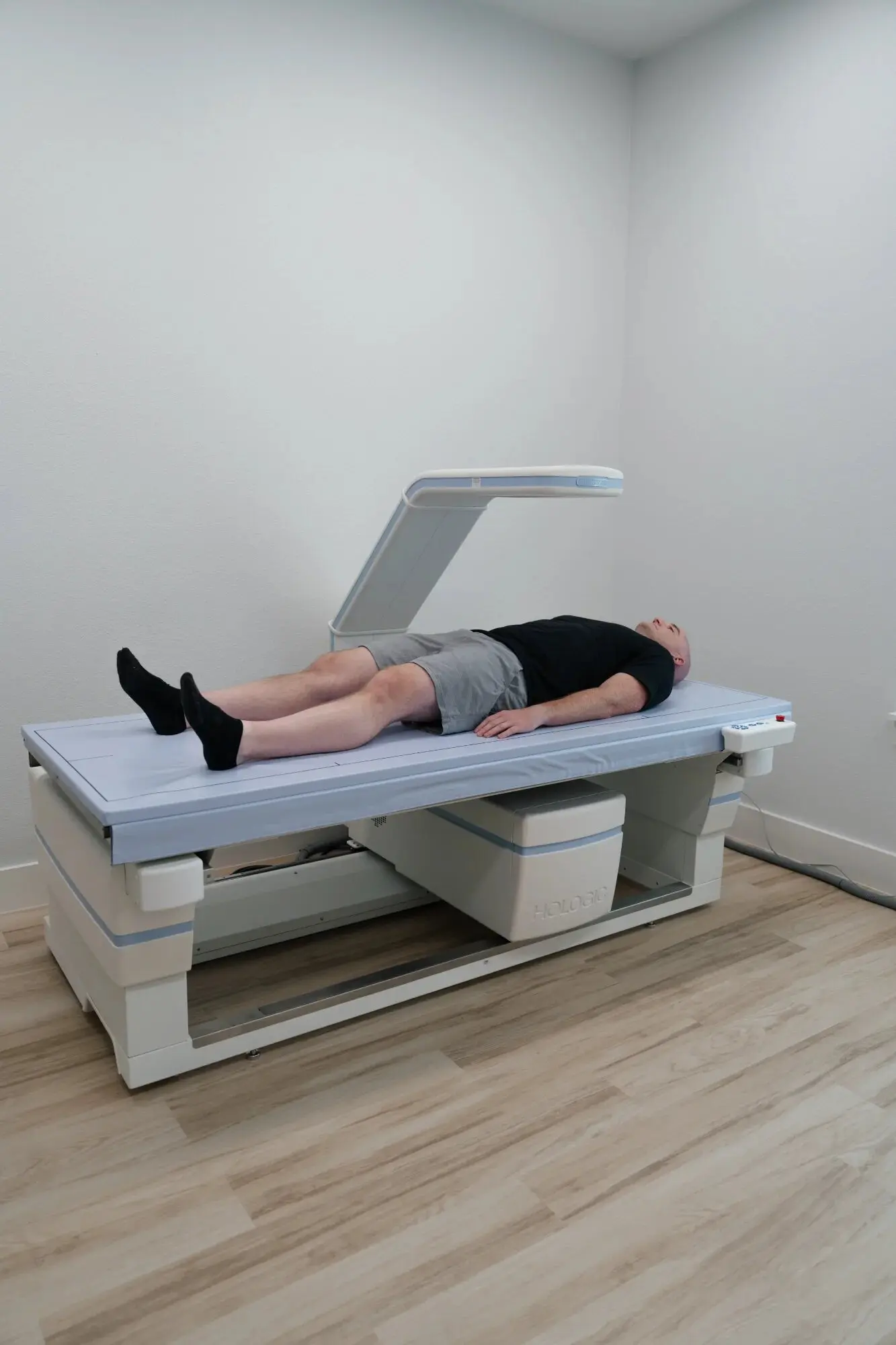
DEXA scanning shows your exact fat and muscle percentages. Resting metabolic rate testing reveals how hypothyroidism has affected your calorie burn—giving us precise targets for treatment.
GLP-1 Therapy
Semaglutide or tirzepatide addresses weight loss directly—working alongside your thyroid medication to reduce appetite, improve metabolism, and help break through the plateau thyroid treatment alone couldn't fix.

Beyond "Normal" Thyroid Levels
"I see so many patients who've been told their thyroid is 'fine' when their Free T3 is suboptimal. But even after optimizing thyroid levels, many still can't lose weight. That's not a personal failure—it's metabolic adaptation. GLP-1 medications give us a way to break through that barrier without fighting against your body's new baseline."
— Dr. Josh Lindsley, DO, DABOM
Treatment Options for Hypothyroid Weight Gain
A multi-pronged approach addressing both thyroid function and metabolic resistance.
GLP-1 Medications
Semaglutide or TirzepatideThe most effective weight loss medications available, working independently of thyroid function to help you lose weight when thyroid medication alone hasn't worked.
- No interaction with thyroid medication
- Overcomes metabolic adaptation
- Reduces appetite significantly
- 15-22% average weight loss
Thyroid Optimization
Beyond TSH TestingComplete thyroid evaluation including markers most doctors don't test. We ensure your thyroid treatment is truly optimized before adding weight loss medication.
- Complete thyroid panel (TSH, Free T4, Free T3, rT3)
- Thyroid antibody testing
- Medication optimization if needed
- Coordination with endocrinology
Metabolic Testing (RMR)
Measure the DamageYour exact resting metabolic rate reveals how much hypothyroidism has slowed your calorie burn—and creates realistic targets for sustainable weight loss.
- Quantifies metabolic slowdown
- Creates accurate calorie targets
- Prevents over-restriction
- Tracks improvement over time
DEXA Body Composition
Precision TrackingMedical-grade body composition analysis that separates fat from water weight—important for thyroid patients who often retain fluid.
- Differentiates fat from water weight
- Monitors muscle preservation
- Shows visceral fat changes
- Tracks true progress beyond scale
Hypothyroid Weight Loss FAQs
Standard thyroid panels often only test TSH. But optimal thyroid function requires looking at Free T3, Free T4, and reverse T3. Many patients have "normal" TSH but suboptimal Free T3—the active hormone that actually drives metabolism. Additionally, years of slowed metabolism may have created metabolic adaptation that persists even after thyroid treatment.
There are no significant interactions between GLP-1 medications and thyroid hormone replacement. We do recommend taking them at different times (about an hour apart) and may monitor your thyroid levels as you lose weight, since weight loss can sometimes change your thyroid medication requirements.
We take a comprehensive approach. We'll review your current thyroid management, order complete thyroid panels (not just TSH), and can optimize your thyroid treatment if needed. Often, combining thyroid optimization with GLP-1 medication produces results when neither alone was working.
Hypothyroidism causes both fat gain and water retention. DEXA body composition scans help differentiate between the two. This is important because water weight often resolves quickly once thyroid function improves, while fat loss requires more comprehensive treatment.
Yes. Hashimoto's thyroiditis is the most common cause of hypothyroidism, and GLP-1 medications are safe and effective for patients with autoimmune thyroid disease. The medications work independently of your immune system and don't interfere with thyroid function or antibody levels.
Most patients notice reduced appetite within 1-2 weeks of starting GLP-1 medication. Visible weight loss typically becomes apparent by weeks 4-8. If we're also optimizing thyroid levels, you may notice improved energy and reduced water retention within the first few weeks of adjustment.
Serving Fort Worth & Surrounding Communities
Our clinic is conveniently located in the Fort Worth Alliance area, just minutes from communities throughout the DFW metroplex.
Located at 4801 Golden Triangle Blvd Suite 121, Fort Worth, TX 76244
Ready to Go Beyond "Normal" Thyroid Levels?
Book a free consultation to discuss how we can help you lose weight—even when thyroid medication alone hasn't worked.