Muscle Loss: The Silent Thief of Aging
You're not as strong as you used to be. The workouts that once built muscle now barely maintain it. This isn't just vanity—muscle is your metabolic engine, your fall prevention, your independence as you age. We help you keep it.

Why Muscle Loss Matters
Sarcopenia affects more than how you look—it impacts how you live.
Metabolic Impact
Muscle burns calories even at rest. Less muscle means slower metabolism, easier weight gain, and harder fat loss.
Bone Health
Muscles protect and strengthen bones. Sarcopenia accelerates bone loss and increases fracture risk.
Functional Strength
Getting up from a chair, climbing stairs, carrying groceries—daily activities get harder as muscle declines.
Independence
Severe sarcopenia is a leading cause of falls and loss of independence in older adults. Prevention matters.
The Numbers Are Sobering
After age 30, most people lose 3-8% of muscle mass per decade. After 60, this accelerates dramatically. By 80, many people have lost 30-40% of their peak muscle mass. This isn't just about looking different—it's about quality of life, independence, and longevity.
The medical term is sarcopenia, and it's now recognized as a disease by the World Health Organization. But unlike many diseases, sarcopenia is highly preventable and even reversible with the right intervention.
The challenge is that typical approaches often fail. Exercise alone becomes less effective with declining hormones. Diet alone can't overcome the catabolic effects of aging. But when we combine resistance training with hormone optimization and adequate protein—results happen even in your 60s, 70s, and beyond.
- 3-8% muscle loss per decade after age 30
- Loss accelerates significantly after 60
- By 80, many have lost 30-40% of peak muscle
- Sarcopenia is treatable and often reversible
Our Muscle Preservation Approach
A comprehensive strategy that addresses all factors contributing to muscle loss.
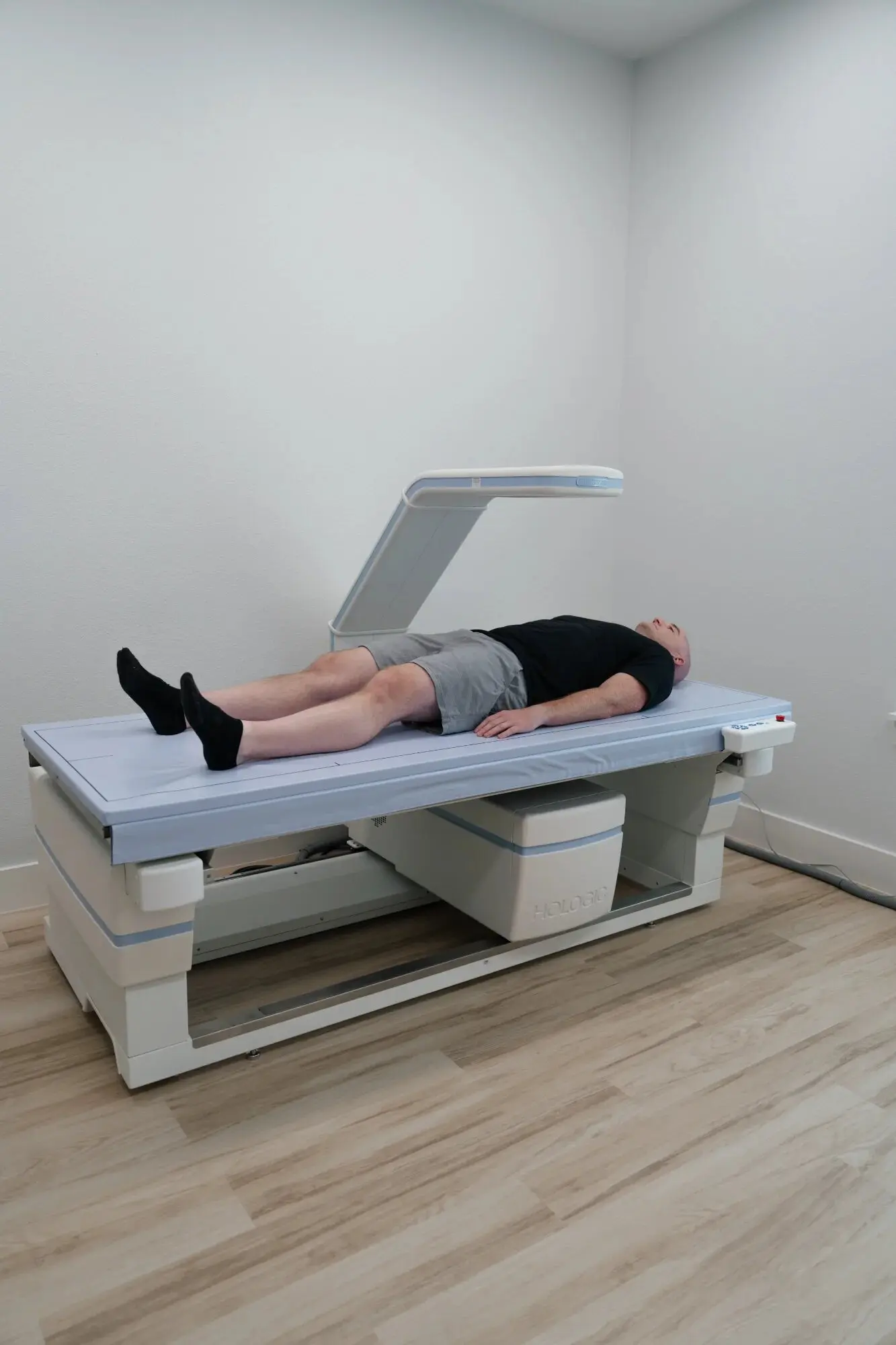
DEXA Assessment
Medical-grade body composition analysis measures your exact lean mass, identifies regional muscle loss, and creates a precise baseline. This is how we know if treatment is working.
Hormone Optimization
Testosterone (in men) and growth hormone decline are major drivers of muscle loss. Optimizing hormones creates the anabolic environment needed to build and maintain muscle.
Nutritional Strategy
Protein requirements increase with age, not decrease. We calculate your specific needs and ensure you're consuming enough to support muscle maintenance or growth.

Building for the Long Term
"Muscle loss isn't something that just happens to you—it's something you can fight. I've seen patients in their 60s and 70s gain muscle when they thought that chapter was closed. The key is addressing all the factors: hormones, nutrition, exercise stimulus. When we optimize the environment, the body responds."
— Dr. Josh Lindsley, DO, DABOM
Treatment Options
Multiple tools to preserve and rebuild lean mass.
Testosterone Optimization
For MenTestosterone is essential for muscle protein synthesis. Low T makes building muscle nearly impossible. Optimization restores the anabolic environment.
- Directly supports muscle growth
- Prevents further muscle breakdown
- Improves workout recovery
- Enhances exercise results
Peptide Therapy
Growth Hormone SupportGrowth hormone declines with age and is crucial for muscle maintenance. Peptides can stimulate natural GH production to support lean mass preservation.
- Supports natural GH production
- Improves recovery and sleep
- Enhances body composition
- Complements TRT
DEXA Body Composition
Precision MonitoringYou can't improve what you don't measure. DEXA scans track lean mass changes with medical precision, ensuring treatment is working.
- Medical-grade accuracy
- Tracks regional muscle mass
- Detects subtle changes
- Documents progress objectively
Nutritional Optimization
Protein & BeyondProtein needs increase with age. We calculate your specific requirements and ensure nutrition supports muscle goals alongside medical treatment.
- Individualized protein targets
- Timing optimization
- Amino acid considerations
- Works with any diet pattern
Muscle Loss FAQs
Sarcopenia is the medical term for age-related muscle loss. After age 30, most people lose 3-8% of muscle mass per decade, with loss accelerating after 60. This isn't just cosmetic—less muscle means lower metabolism, weaker bones, higher fall risk, and decreased independence as you age. It's now recognized as a disease by the WHO.
Yes. While preventing muscle loss is easier than rebuilding it, studies consistently show adults of any age can gain muscle with proper stimulus (resistance training) and hormonal support (adequate testosterone, growth hormone). Combining exercise with hormone optimization and adequate protein produces the best results, even in your 60s, 70s, and beyond.
Testosterone is anabolic—it stimulates muscle protein synthesis and inhibits muscle breakdown. Low testosterone makes building muscle significantly harder and losing it easier. Optimizing testosterone levels often makes the difference between struggling to maintain muscle and actually gaining it, even with the same exercise routine.
Older adults actually need MORE protein than younger people—around 1.0-1.2 grams per kilogram of body weight daily, possibly more if trying to build muscle. For a 180-pound person, that's 80-100+ grams daily. Most people significantly undereat protein, which accelerates muscle loss.
Resistance training is essential, but "heavy" is relative to your current strength. The key is progressive overload—gradually increasing demands on your muscles. This can be achieved with weights, machines, bands, or bodyweight exercises. We can discuss what's appropriate for your current fitness level and goals.
DEXA body composition scanning is the gold standard. Unlike scales (which don't differentiate fat from muscle) or calipers (which are imprecise), DEXA can detect changes of even 1-2 pounds of lean mass. We typically scan at baseline and every 3-6 months to objectively track whether treatment is working.
Serving Fort Worth & Surrounding Communities
Our clinic is conveniently located in the Fort Worth Alliance area, just minutes from communities throughout the DFW metroplex.
Located at 4801 Golden Triangle Blvd Suite 121, Fort Worth, TX 76244
Ready to Protect Your Muscle Mass?
Book a consultation to assess where you stand and discuss how we can help you maintain strength and function as you age.