Low Testosterone Symptoms: When Something Feels Off
You're tired all the time. The belly fat won't budge. Your drive—for everything—has disappeared. You tell yourself it's just stress, just aging. But what if it's your testosterone? Getting tested is the first step to getting answers.

Common Symptoms of Low Testosterone
Most men experience several of these symptoms together—rarely just one.
Persistent Fatigue
Tired even after a full night's sleep. Coffee doesn't help like it used to. You lack the energy you once had.
Unexplained Weight Gain
Fat accumulating around your midsection despite no change in diet. Muscle definition disappearing.
Brain Fog
Difficulty concentrating, memory issues, mental sharpness isn't what it used to be.
Decreased Libido
Interest in sex has dropped significantly. It's not just about opportunity—the desire itself is gone.
Muscle Loss
Losing strength despite workouts. Muscle mass declining even with resistance training.
Mood Changes
Increased irritability, less patience, or even depression. You don't feel like yourself.
The Testosterone Decline Reality
Testosterone levels naturally decrease about 1-2% per year after age 30. By 45, many men are operating at levels 20-40% below their peak. By 60, some men have testosterone levels lower than many women.
But here's what's often missed: "normal" lab ranges are based on population averages that include unhealthy, overweight, and elderly men. A level of 350 ng/dL might be "within normal range" but could represent a dramatic drop from your personal baseline—and explain all your symptoms.
This is why comprehensive testing matters. We look beyond just total testosterone to understand your complete hormonal picture and whether your symptoms align with what we find in the lab.
- Testosterone drops 1-2% yearly after age 30
- "Normal" doesn't mean optimal for you
- Symptoms often appear before levels are officially "low"
- Comprehensive testing reveals the full picture
Our Diagnostic Approach
Comprehensive testing that goes beyond standard lab work.
Symptom Assessment
We start by understanding your symptoms in detail. When did they start? How have they progressed? What have you already tried? Your experience matters as much as lab numbers.
Comprehensive Testing
Complete hormone panels including Total and Free Testosterone, SHBG, LH, FSH, Estradiol, Prolactin, Thyroid markers, CBC, and metabolic panels. We want the full picture.
Results + Recommendations
We review your results together, explaining what each marker means. If treatment is appropriate, we discuss options—including lifestyle modifications, TRT, and adjunctive therapies.

Taking Men's Health Seriously
"Men are often told their symptoms are just stress, just aging, just normal. But feeling exhausted at 45, gaining weight despite exercising, losing interest in things you used to enjoy—that's not something to ignore. Comprehensive testing gives us real answers, and if testosterone is low, treatment can be genuinely life-changing."
— Dr. Josh Lindsley, DO, DABOM
Testing & Treatment Options
From diagnosis to treatment, comprehensive care under one roof.
Comprehensive Hormone Panel
Complete TestingNot just testosterone—a complete picture of your hormonal health including markers that affect how testosterone works in your body.
- Total and Free Testosterone
- SHBG, LH, FSH, Estradiol
- Thyroid panel (TSH, Free T4, Free T3)
- CBC, metabolic panel, PSA
Testosterone Replacement
TRT OptionsIf low testosterone is confirmed, we offer multiple treatment options tailored to your lifestyle and preferences.
- Weekly injections (most cost-effective)
- Topical creams (daily application)
- Ongoing monitoring and optimization
- Fertility preservation options available
Metabolic Assessment
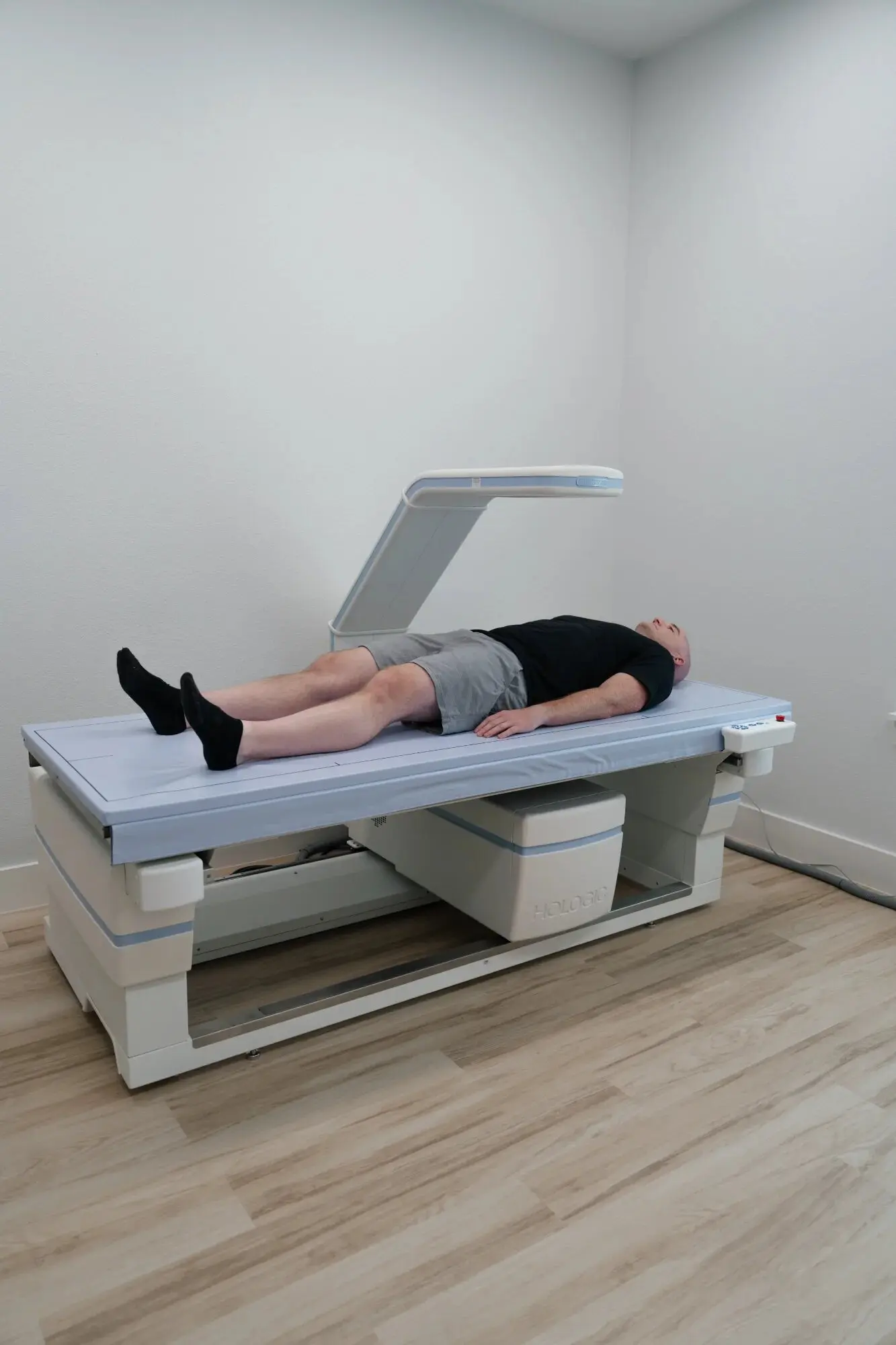
Beyond HormonesLow testosterone often coexists with metabolic issues. DEXA and metabolic testing help us address the complete picture.
- Body composition analysis
- Visceral fat measurement
- Resting metabolic rate
- Complete weight loss integration
Lifestyle Optimization
Natural SupportSome men can improve testosterone naturally. We assess and recommend evidence-based lifestyle interventions.
- Sleep optimization
- Exercise programming
- Nutrition strategies
- Stress management
Low Testosterone FAQs
Standard lab ranges consider below 300 ng/dL as officially low. However, symptoms often appear when levels drop below 500-600 ng/dL, especially if you previously had higher levels. We look at your symptoms alongside lab values—not just numbers in isolation.
Yes. Low testosterone promotes fat storage (especially around the abdomen) while making it harder to build and maintain muscle. Since muscle burns more calories than fat, this creates a vicious cycle: low T leads to weight gain, and excess body fat further suppresses testosterone production.
Total testosterone measures all testosterone in your blood. Free testosterone measures the portion that's actually available for your body to use (not bound to proteins). You can have normal total testosterone but low free testosterone—which explains symptoms. That's why we test both.
When properly prescribed and monitored, TRT is safe for most men. We screen for contraindications, monitor blood counts and PSA, and adjust dosing to minimize side effects. The risks of untreated low testosterone—metabolic dysfunction, cardiovascular disease, depression—often outweigh treatment risks.
TRT can suppress sperm production. If fertility is a concern, we have options: HCG can be used alongside testosterone to maintain fertility, or we can use alternative treatments like Clomid that boost natural production without suppressing fertility. We discuss this before starting any treatment.
Many men notice improved energy and mood within 2-3 weeks. Libido improvements typically occur within 3-6 weeks. Body composition changes (less fat, more muscle) take longer—usually 3-6 months. Full benefits continue to develop over the first year of optimized treatment.
Ready to Get Answers?
Book a free consultation to discuss your symptoms and determine if comprehensive testosterone testing is right for you.